
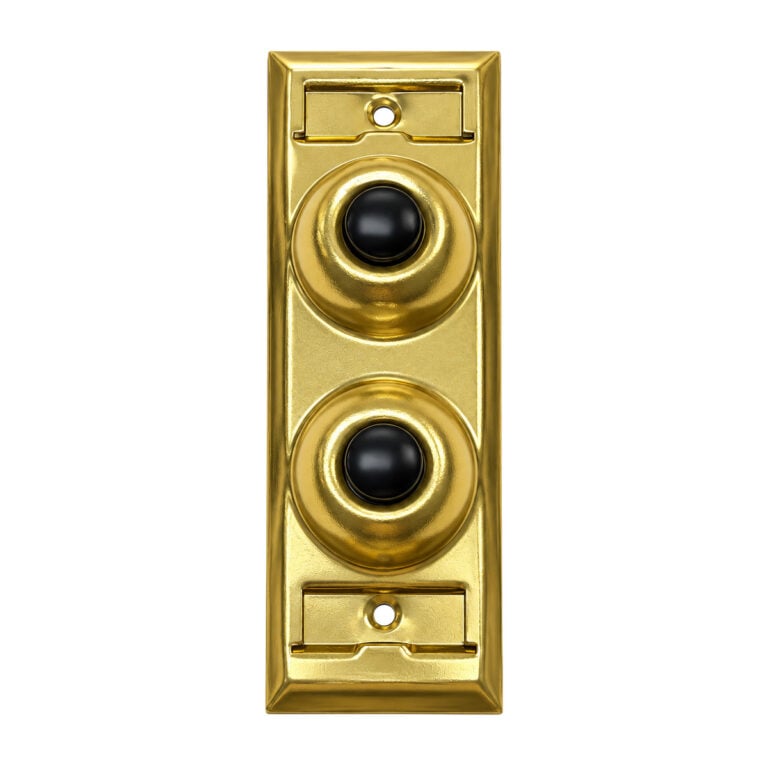
Button Specs
Measurements and mounting details
| Length | 4-7/8" |
|---|---|
| Width | 1-3/4" |
| Depth | 1-1/4" |
| Shape | Rectangle |
| Mounting Style | Flush |
| Hole Distance | 3-3/4" |
BC203 Two-Family Doorbell Button with Name Plates, Brass or Polished Chrome
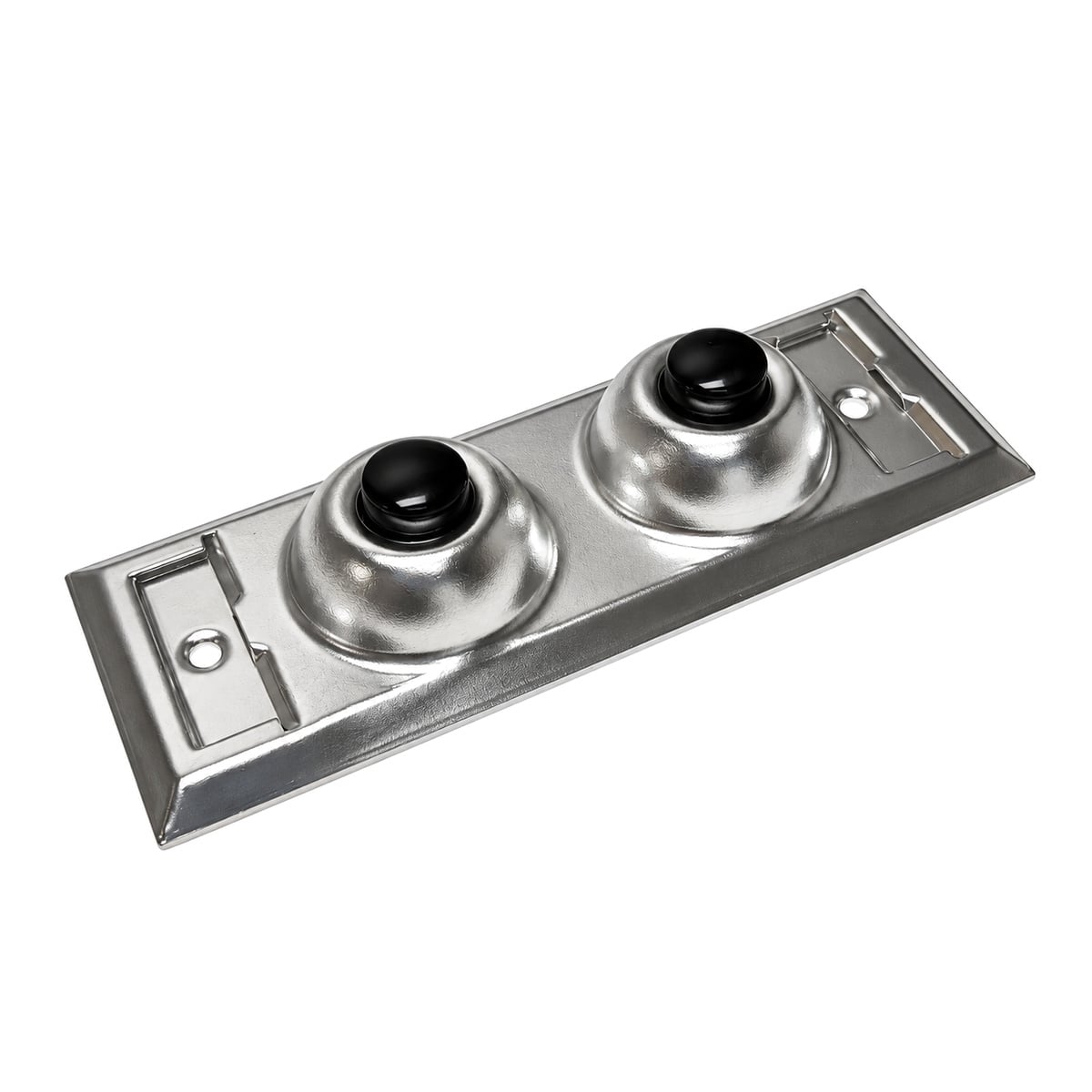
The Lee Electric BC203 puts two separate unlighted push buttons and two name plate pockets on one metal plate, so a duplex or two-unit entrance gets one clean, labeled doorbell. Each button has its own rear screw terminals and can ring its own chime. Choose brass (BC203B) or polished chrome (BC203C). Rated up to 16V for wired, transformer-powered chimes, bells, and buzzers. Mounting screws included.
Safe checkout
Encrypted checkout with trusted payment processing
Accessories & Add-Ons
Expand or complete your system with compatible components.
DT-1610A
Ensure your doorbell rings loud and clear with the IQ America DT-1610A. This reliable, hardwired transformer converts standard household power to a safe 16-volt supply, perfect for standard wired door chimes. Designed with a clamp-lock nut for secure mounting in metal or non-metallic electrical boxes, it is UL listed for safety and built for long-lasting performance.
CH1000
The Craftmade CH1000 is a narrow profile wired door chime for homeowners who want a cleaner, less bulky wall unit. Its slimmer cabinet and simple finish options make it easier to fit into updated entryways and tighter interior spaces.
0 items selected · Total: $0.00
Buying notes
Is this the right fit?
- Good fit when
- Use this when the existing wired doorbell system works and you are replacing the outside button for fit, finish, lighting, or weather exposure.
- Look at another option when
- The chime does not ring even with the old button's two wires touched together. That points to the transformer or the chime, not the button. If you want a lighted button, check that the existing chime is the mechanical type most lighted buttons need.
- Mounting and fit
- This button is listed as flush mount. Surface-mount buttons sit on top of the trim or siding with the wires through a small hole behind them. Flush or recessed buttons drop into a cutout so the faceplate sits closer to the wall. Compare the mounting style, faceplate size, and screw spacing with the old button so the new one covers the old footprint and lines up with the existing holes.
- Setup note
- Turn off power to the low-voltage circuit, note which wire went to which terminal on the old button, then move the two wires to the new button's screw terminals and mount it with the included screws.
BC203 Lee Electric Two-Family Doorbell Button with Name Plates, Brass or Polished Chrome
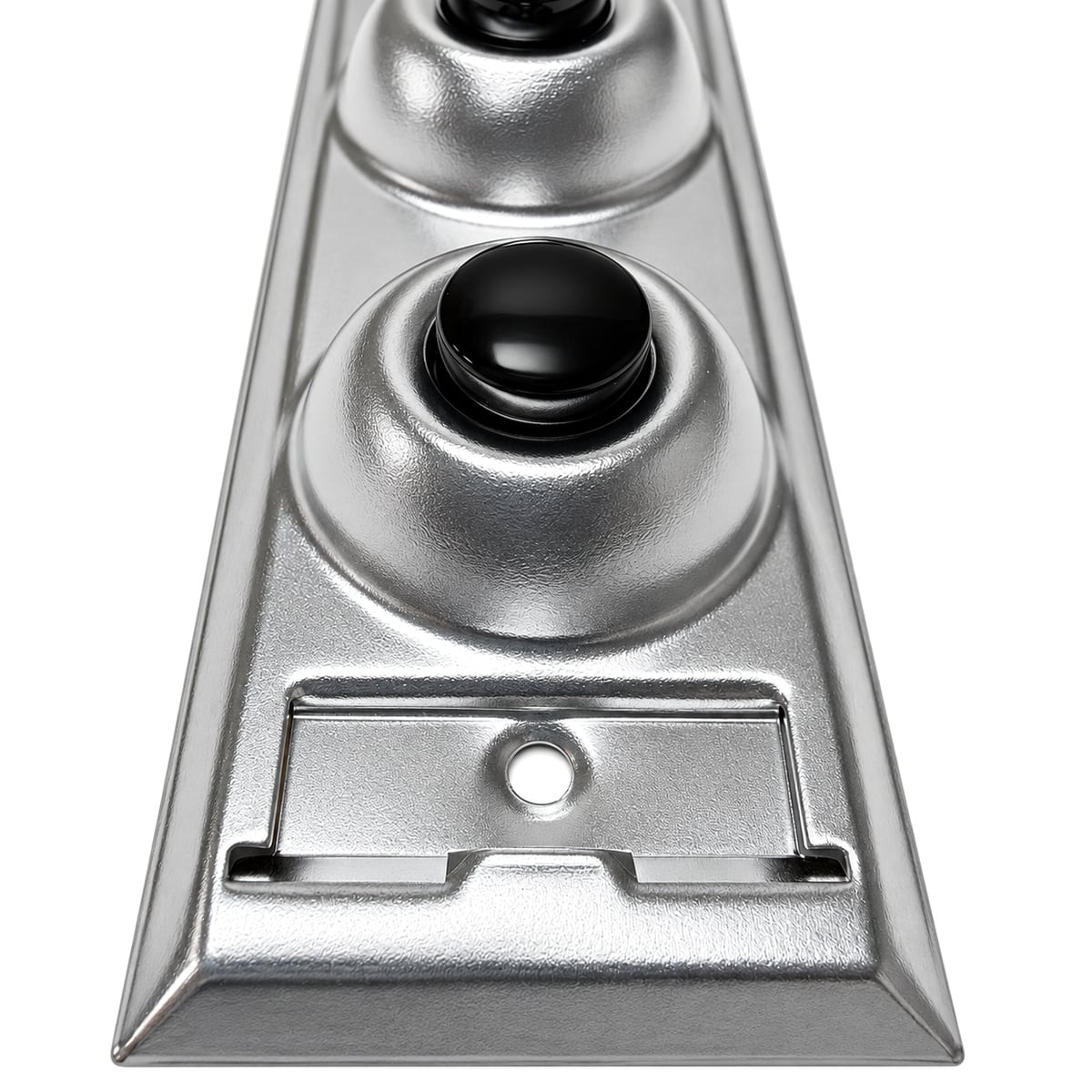
The Lee Electric BC203 is a wired doorbell button made for entrances that serve two households. One metal plate carries two separate black push buttons and two name plate pockets, so visitors to a duplex, a two-flat, a house with a basement apartment, or a shop with an upstairs tenant can see whose bell they are ringing before they press it. Each button is wired on its own, which means each one can ring a different chime inside the building. It comes in two finishes: brass (BC203B) and polished chrome (BC203C). Pick the finish from the menu above.
This is an unlighted button. There is no bulb to burn out and nothing to keep a trickle of current flowing through the chime, which keeps the wiring simple and makes it a safe fit for older bell and buzzer systems as well as modern chimes.
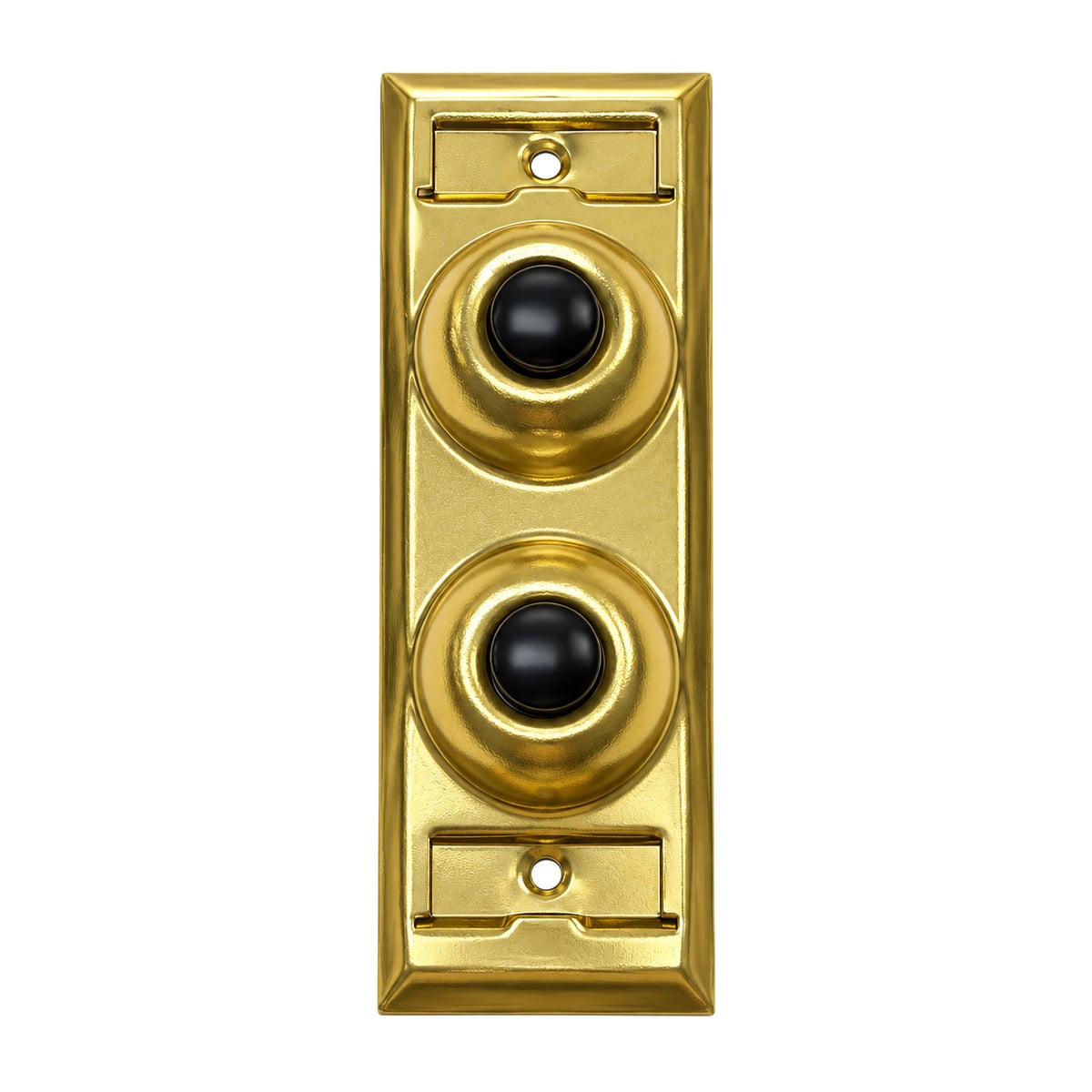
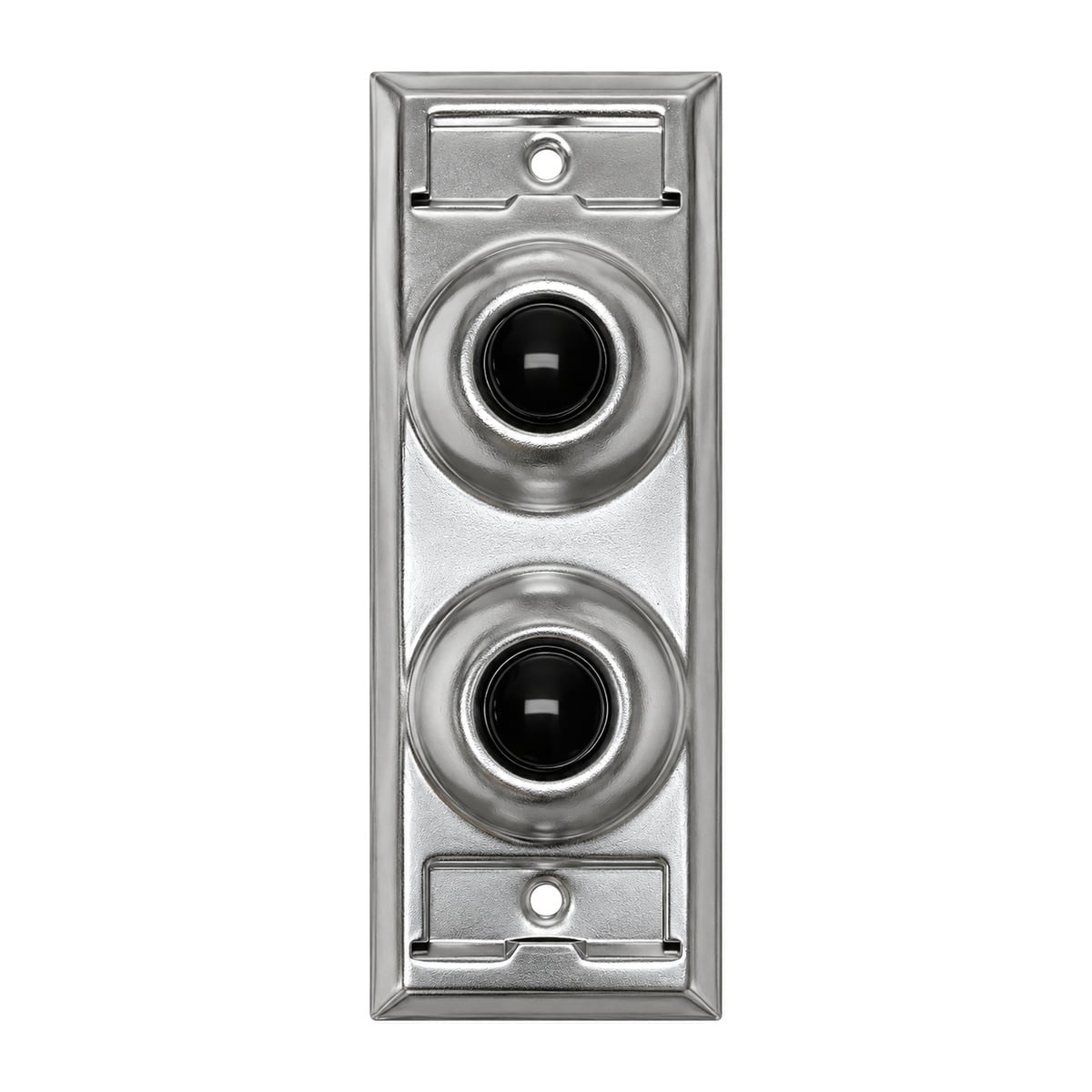
How the BC203 Works
Behind each raised dome is its own contact with two screw terminals. Pressing a button closes that contact and completes the low-voltage circuit between your doorbell transformer and the chime, bell, or buzzer wired to it. Release the button and the circuit opens again. There is no electronics inside, no battery, and no pairing. It is the same momentary switch doorbells have used for decades.
Because the two buttons are independent, you have a few ways to wire it:
- Two chimes, one transformer: run each button to its own chime in each unit. A transformer with some headroom, such as the DH910 tri-volt transformer or the T1615 16V 15VA transformer, will handle two chimes comfortably.
- One chime, two tones: wire one button to the "front" terminal and the other to the "rear" terminal of a single two-tone chime so the household can tell the buttons apart by sound.
- Replacing an old two-button plate: move the existing pairs of wires from the old button to the new terminals, mount the plate with the included screws, and you are done. Lee's own instructions on the package say the same thing: no special wiring required.
The BC203 is rated for systems up to 16 volts, which covers the standard 16V doorbell transformer found in most homes. It is for wired, transformer-powered chimes only. Do not connect it to a battery-powered chime, and if you are not sure what you have, our doorbell transformer guide walks through how to check.
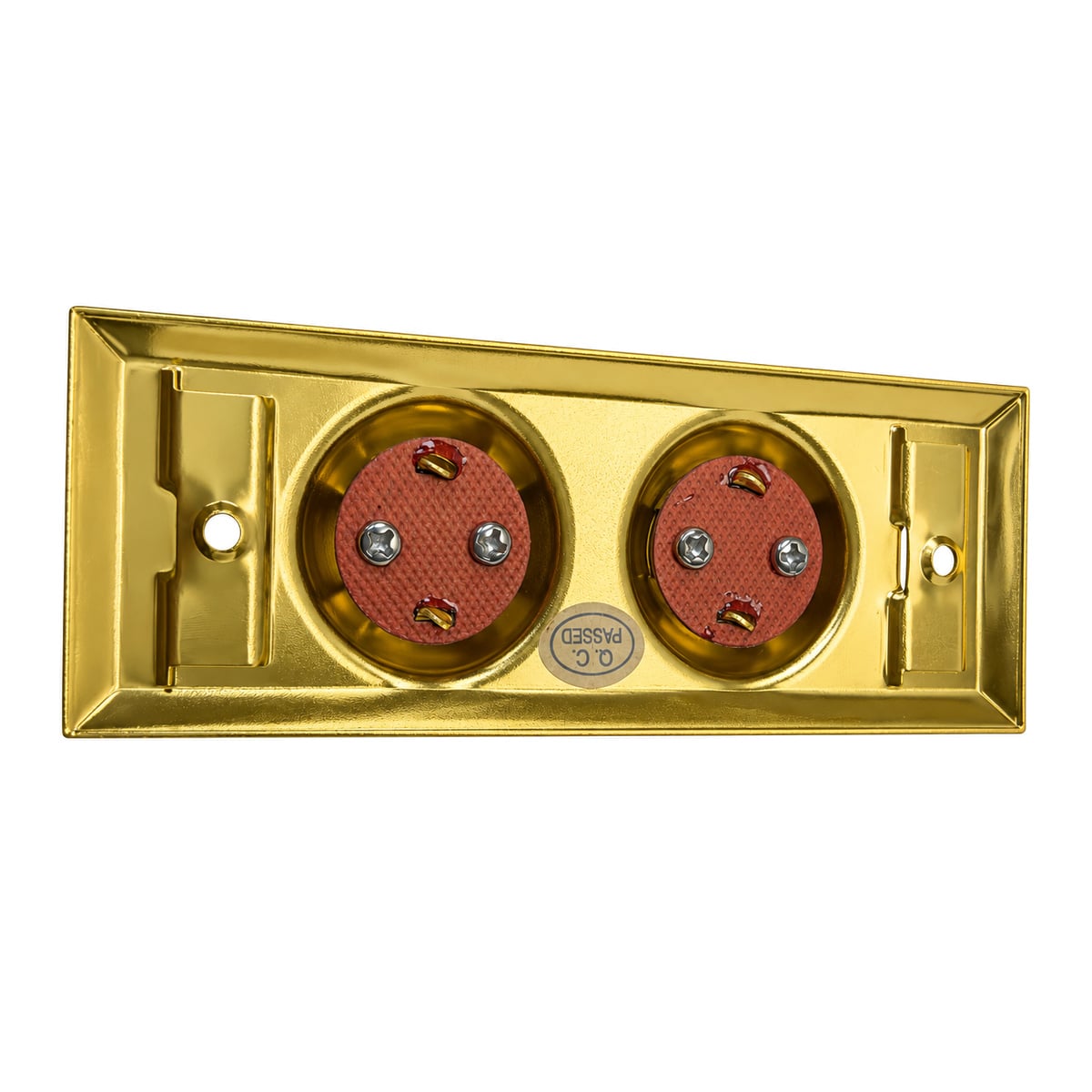
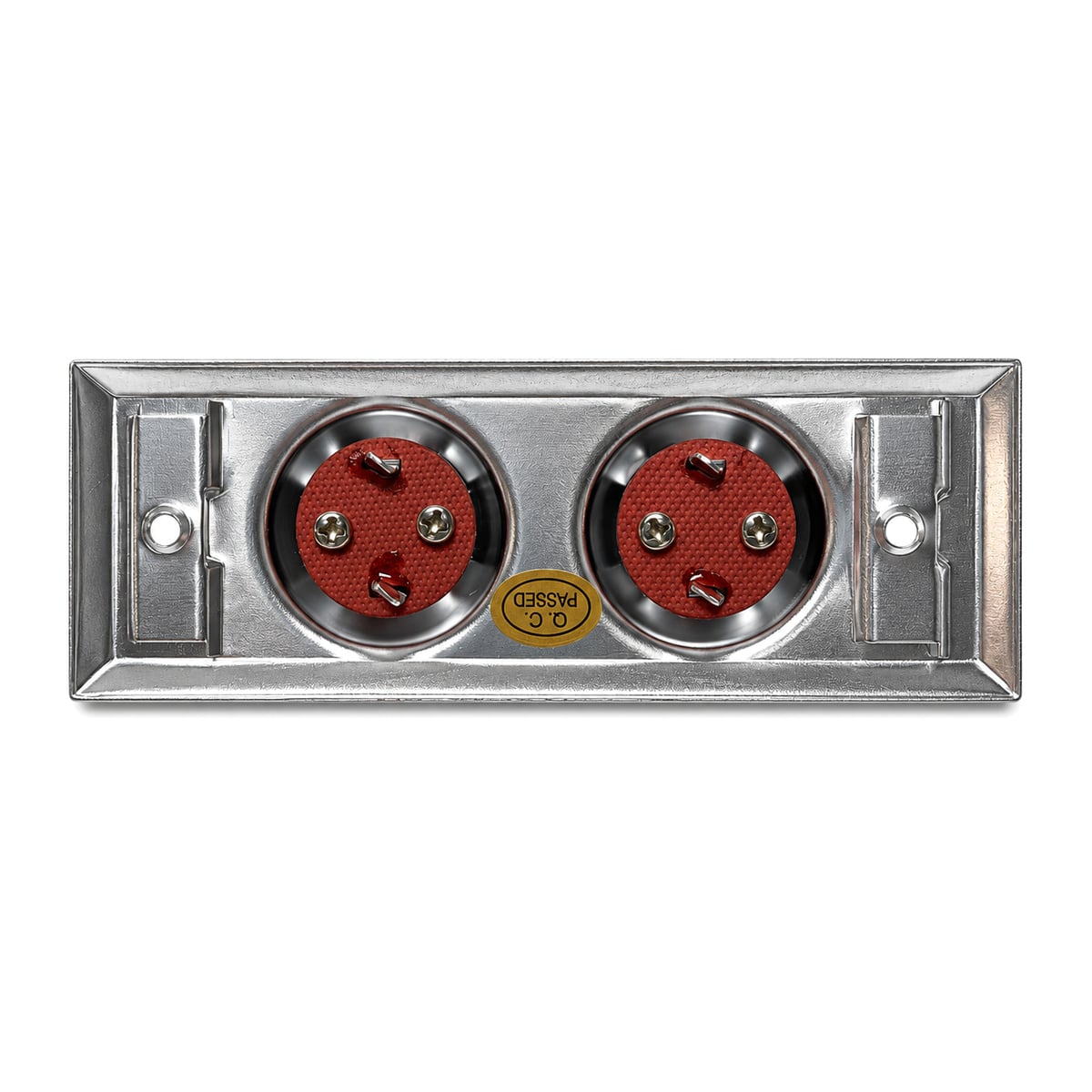
What Makes It Different from a Single Button
Most of the wired doorbell buttons we sell are single-button plates for one front door. The BC203 is one of the few that puts two buttons on a single plate with labels, so you do not have to mount two separate buttons side by side and hope visitors guess right. Compared with a plain round button like the DH1605 or the small DH1805 brass button with black center, you get:
- Two buttons on one 4⅞" tall plate instead of two separate installs
- A name plate pocket above and below the buttons for a slide-in card or printed label
- Mounting screw holes that sit inside the name plate pockets, so a label card covers the screw heads once it is in place
- Rear screw terminals on each button, no soldering or crimping
If you have three units at one door, the BC208 three-family station is the same idea with a third button, and the BC268 is a two-family plate with lighted buttons for a dark entry.
Choosing Between Brass and Polished Chrome
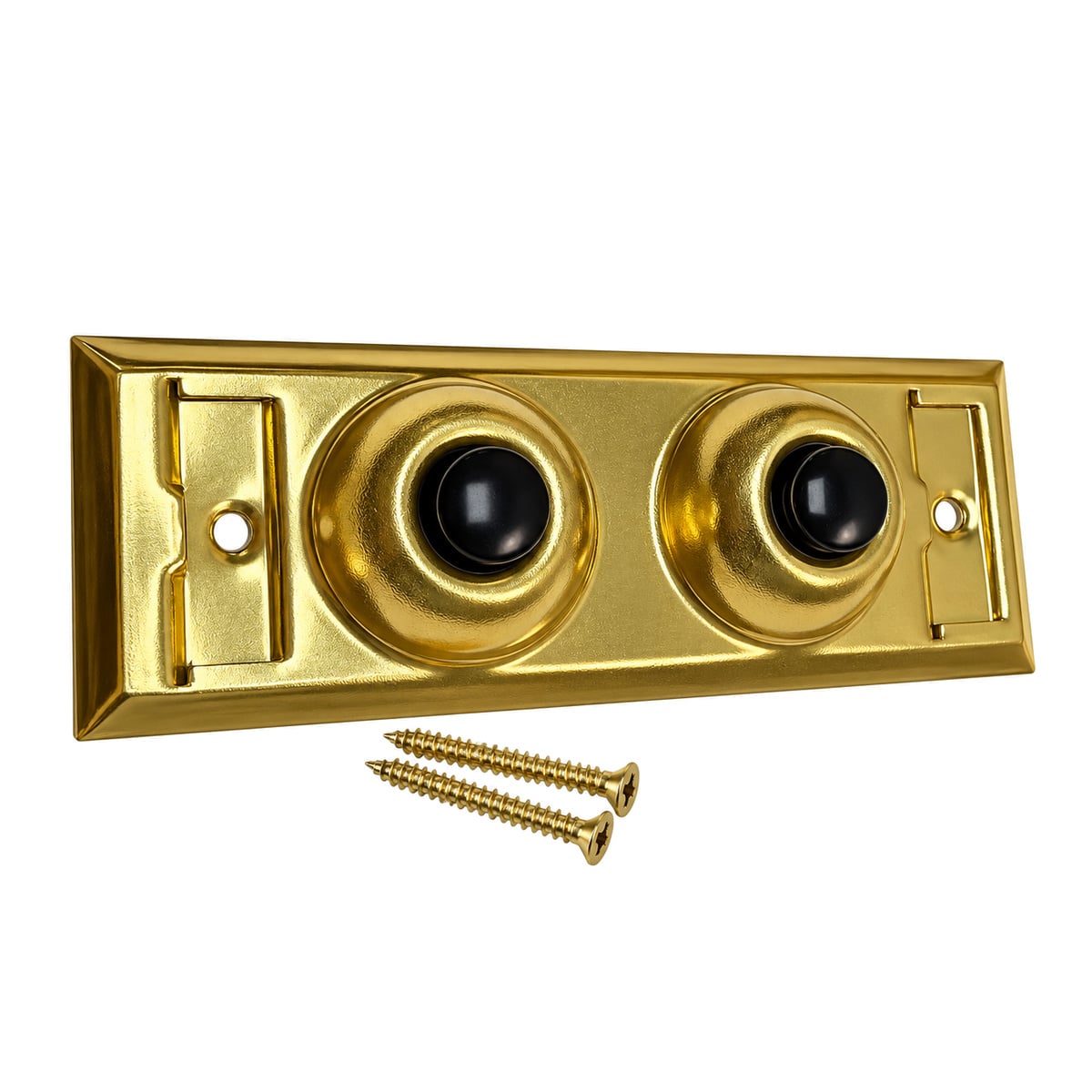
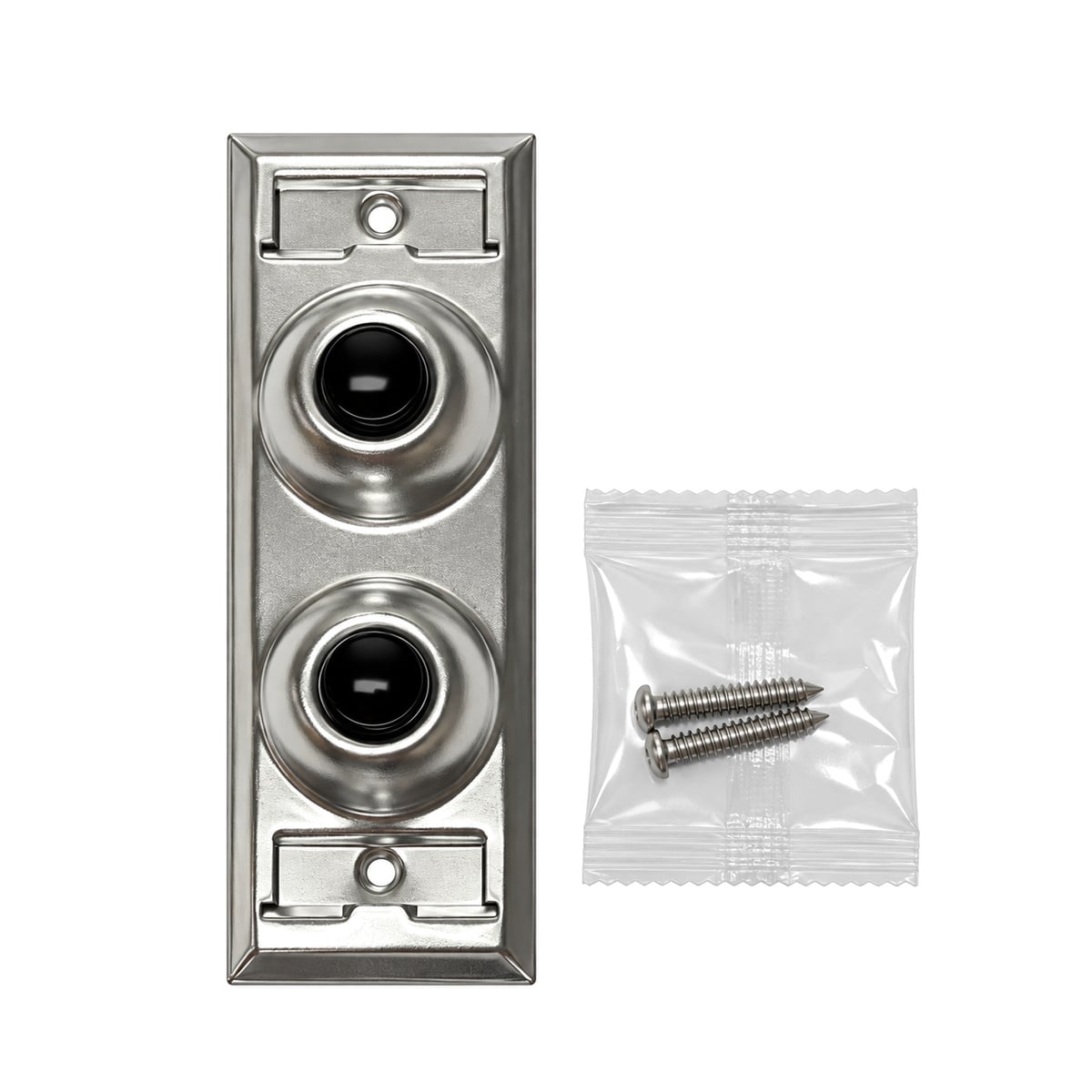
The two finishes are the same plate, the same buttons, and the same wiring. The BC203B has a bright brass-tone finish over metal, a traditional look that suits brick, painted trim, and older apartment entries, and it matches the other brass-tone Lee buttons if you have more than one entrance to outfit. The BC203C is polished chrome, a mirror-bright silver that goes with stainless hardware, aluminum storm doors, and newer entries with satin or chrome door handles. On both, the push buttons themselves are black plastic.
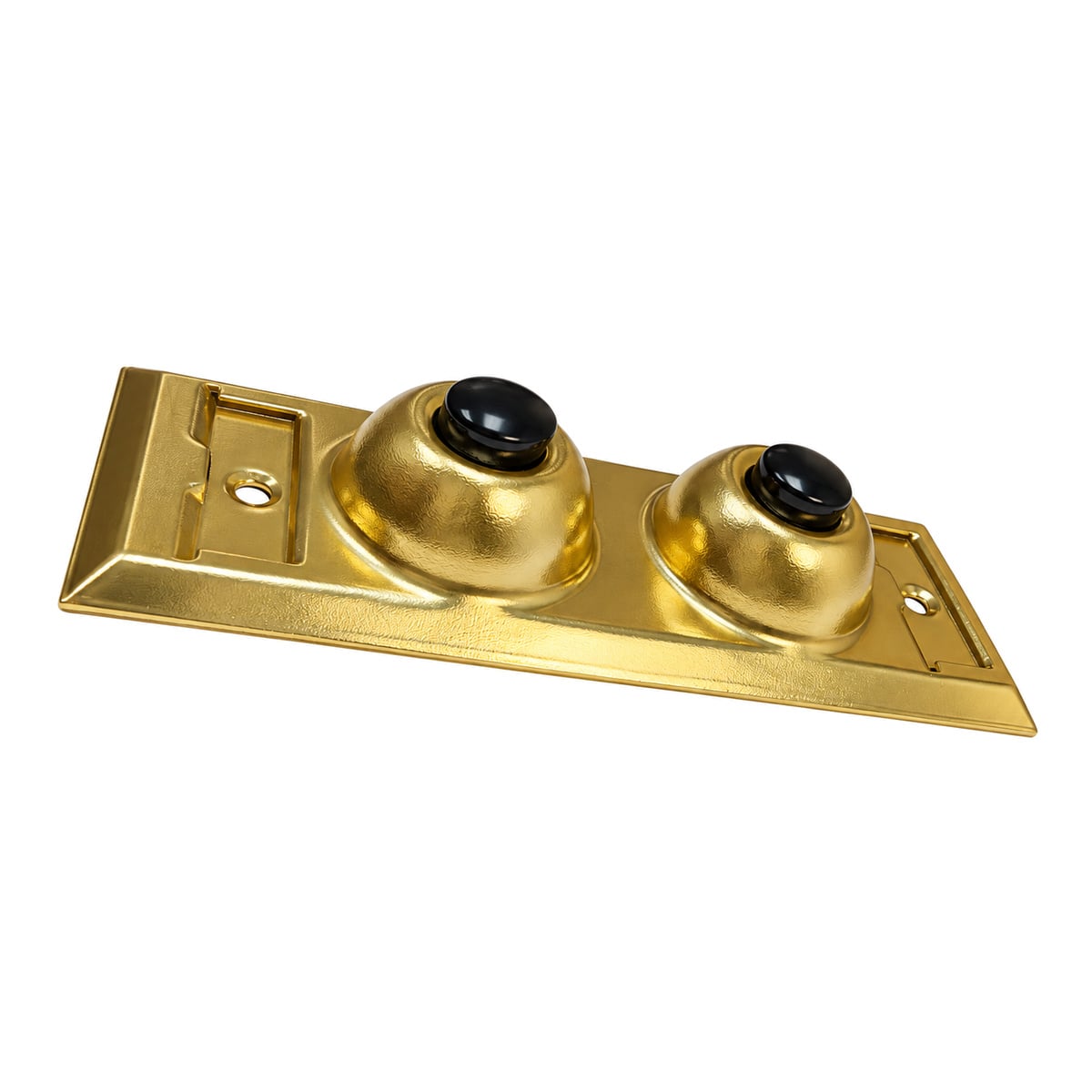
What's in the Package
- 1 x BC203 two-button doorbell plate with two name plate pockets, in the finish you chose
- 2 x wood screws for mounting, matched to the plate finish
Name cards are not included. The pockets are sized for a slip of card stock or a printed label.
BC203 Specifications
- Brand: Lee Electric (West New York, NJ)
- Model: BC203, sold as BC203B (brass) and BC203C (polished chrome)
- Type: Wired, unlighted, two-family push button station
- Buttons: 2, each with its own two-terminal contact
- Name plates: 2 pockets, one above and one below the buttons
- Finish: Brass-tone or polished chrome plate and rings, black plastic buttons
- Mounting: Flush mount with two wood screws (included)
- Plate size: about 4⅞" tall x 1¾" wide x 1¼" deep at the button domes
- Mounting hole spacing: about 3¾" center to center
- Voltage: Up to 16V AC, low-voltage wired systems only
- Works with: Wired chimes, bells, and buzzers powered by a doorbell transformer
- Not for: Battery-powered chimes or wireless doorbells
- UPC: 721667203008 (BC203B brass), 721667203206 (BC203C polished chrome)
- Made in China for Lee Electric Inc.
Where the BC203 Fits
The usual place for this button is the shared front door of a duplex or two-flat, where each unit has its own chime. It also works for a single home with a separate in-law suite or basement rental, a storefront with an apartment above it, or a side-by-side twin home where both doors open onto one small porch. If you only need the second button for a back door or a workshop, you can wire it to the second input on a two-tone chime instead of a second chime.
If you need a transformer or wire to go with it, see our doorbell transformers and wire, and for the chime itself, browse wired doorbells. If you are matching this plate to an existing opening, the push button measurement guide shows how we measure hole spacing and plate size.
The Lee Electric BC203 gives two households one clear, labeled doorbell at the door, in brass or polished chrome. Order it here with the mounting screws included, and add a transformer or chime from the links above if you are starting from scratch.
Specifications
| Brand | Lee Electric |
|---|---|
| Condition | New |
| Country Of Origin | China |
| Mounting Screw Distance | 3.75 |
| Product Dimensions | 1.75L x 1.25W x 4.875H |
| Button Mount Style | Flush |
| Lighted Button | Non Lighted Button |
| Button Shape | Rectangular |
| Number Of Buttons | 2 x Push Buttons |
| Door Count | Multi-Door |
| Finish | Polished Chrome, Brass |
Reviews
Customer Reviews
No reviews yet for BC203 Two-Family Doorbell Button with Name Plates, Brass or Polished Chrome.
Q&A
Product FAQs & Customer Q&A
Answers from our team for BC203 Two-Family Doorbell Button with Name Plates, Brass or Polished Chrome.
How do I know if a wired push button will fit?
Check the mounting style, outside dimensions, and screw-hole spacing. Surface-mount buttons sit on the wall, while recessed or flush buttons need an opening that matches the button body.
Answered for Wired Buttons
Can I replace only the wired doorbell button?
Yes, if the chime and transformer still work. A wired push button is usually a separate low-voltage switch, so you can replace a worn or dated button without replacing the entire doorbell system.
Answered for Wired Buttons
Why does my lighted wired button stay on?
Most lighted wired buttons use a small lamp or LED that stays lit so the button is visible at night. If the chime buzzes, hums, or does not ring correctly, check transformer and chime compatibility.
Answered for Wired Buttons
Can two apartments share one doorbell button?
They can, but then both chimes ring for every visitor, or one chime rings and the other unit never hears the door. The better setup is one button per unit on a single plate, such as the BC203 or BC268, with each button wired to its own chime. Visitors press the button next to the name they want.
Answered for Wired Buttons
Do I need a separate transformer for each unit?
No. One doorbell transformer can run two or three mechanical chimes as long as its VA rating covers them. A 16V 10VA transformer is marginal for two chimes; a 15VA or 30VA unit gives headroom. If each unit already has its own transformer, keep them: each button on the station is an independent switch and simply goes in series with its own unit's circuit.
Answered for Wired Buttons
Which multi-door button works with an electronic chime?
The unlighted ones. The BC203 and BC208 have plain contacts with no lamp, so they work with mechanical and electronic chimes alike. Lighted buttons pass a small current through the chime all the time to run the lamp, which most electronic chimes do not tolerate, so use the lighted BC268 only with mechanical chimes.
Answered for Wired Buttons
Where do the name cards go?
Each multi-door station has a pocket or window under each button. On the BC203 and BC208 the pocket is an open metal slot that takes a strip of card stock or a printed label, and it covers the mounting screw head. On the BC268 the window is a clear lens with a white card behind it, held by a snap-in carrier on the back. Name cards are not printed for you; most people use a label maker or a printed strip.
Answered for Wired Buttons
Related support
Setup and compatibility help
How to Wire a Push Button to the ERA-UTX Universal Transmitter
Wire a non-lighted doorbell button or a wired door contact to the ERA-UTX universal transmitter: which terminals to use, how to pair and mount it, and why it helps range.
How to Install a Wired Doorbell
Get a plain-language answer to how to install a wired doorbell, with setup notes, compatibility details, and links to related help and product pages.
How to Replace a Wired Doorbell Push Button
Do you have an older wired doorbell button or simply want to replace a wired doorbell button with a new design? At first, it could seem a little overwhelming, but it’s a fairly straightforward process if have the right tools and the know-how. Please watch the short video below where our friend, Dennis Coffey demonstrates…