
800-366-7235
Since 1998

Safety Notice

Coin Battery Choking Hazard Warning

Some transmitters, push buttons, and accessories use button cell or coin batteries. Those batteries can be extremely dangerous if swallowed or inserted into the nose or ear, so this page explains the warning, the handling rules customers should follow, and the product-safety standards now used for affected consumer products.

Page update

Updated July 2, 2026

Important warning

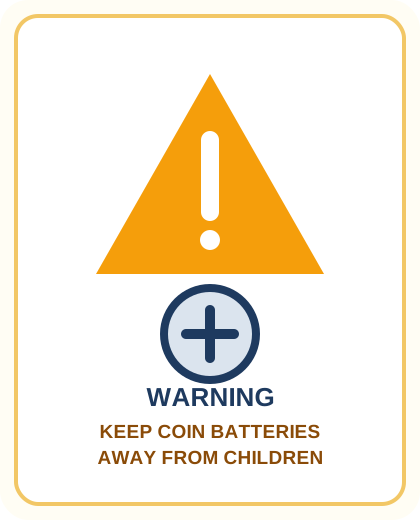
Coin battery warning graphic
Ingestion Hazard

Button cell and coin batteries can cause severe internal injury if swallowed. According to CPSC guidance, a swallowed battery can lead to internal chemical burns in as little as two hours. Even used batteries can remain dangerous.

If you think a child or adult may have swallowed or inserted a battery into the nose or ear, seek emergency medical help immediately. Do not wait for symptoms to appear.

What Reese's Law changed

Reese's Law created federal safety requirements for many consumer products that contain or are designed to use button cell or coin batteries. CPSC guidance states that the product requirements are codified at 16 CFR part 1263, built around the ANSI/UL 4200A safety standard, and apply to affected products manufactured or imported on or after October 23, 2023.

For affected consumer products, CPSC says the standard requires:

  • battery compartments that need a tool or two simultaneous hand movements to open
  • compartments that keep batteries from becoming accessible during normal use and abuse testing
  • warning labels on product packaging
  • warnings on the product itself when practical
  • matching warnings in instructions and manuals

You can review the current federal guidance on the CPSC button cell and coin battery business guidance page.

Safe handling and storage

  • Keep spare and used batteries out of reach of children.
  • Store replacement batteries in a closed container, drawer, or cabinet.
  • Make sure the battery compartment is fully closed after every battery change.
  • Stop using the product if the battery compartment does not latch securely.
  • Do not mix old and new batteries or different battery chemistries unless the product instructions allow it.
  • Follow local recycling or disposal rules instead of throwing loose batteries into household trash.

What to do if ingestion is suspected

Treat a suspected swallowed coin battery as a medical emergency. If this may have happened, call 911, go to the nearest emergency room, or contact your local poison center right away. Fast action matters.

If possible, bring the product packaging or battery type information with you so medical personnel can identify the battery more quickly.

How this applies to 1800Doorbell products

Some doorbell push buttons, transmitters, and alert accessories sold by 1800Doorbell use button cell or coin batteries such as CR2032, CR2450, and similar formats. Product pages should identify when a coin-battery warning applies, and many manuals include additional battery handling details.

If you are comparing products, review the product description, manual, and support notes before purchase. For general setup help, visit our FAQ. For compatible entry systems and alert accessories, browse the product catalog.

Contact 1800Doorbell

Questions about a battery-operated product?

If you need help identifying a replacement battery, confirming whether a product contains a coin battery, or locating the right manual, contact 1800Doorbell support before ordering or installing the product.