
Types of Driveway Alarm Sensors
Get a plain-language answer to types of driveway alarm sensors, with setup notes, compatibility details, and links to related help and product pages.
Updated: July 27, 2026Original publish date: November 22, 2021
Short answer: This page explains types of driveway alarm sensors in practical terms, with links to the products, setup guides, and troubleshooting steps that usually matter next.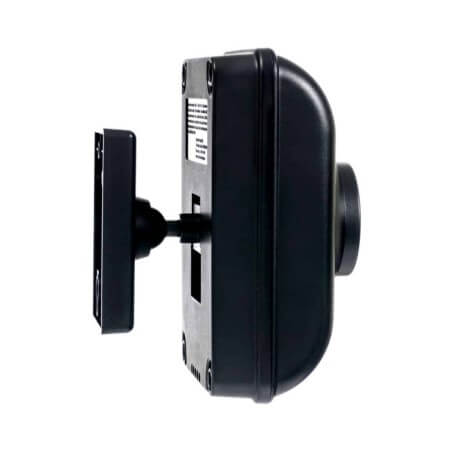
- Passive Infrared Sensor (PIR): These are the most common type. Passive infrared sensors are triggered when a combination of heat and movement is detected in the monitored zone. This means a car, truck, person, or any animal will trigger the sensor IF it passes through the monitored zone.
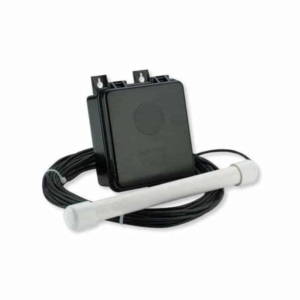
- Magnetometer Bases Sensor: These sensors are designed only to pick up automobiles and work when heavy metallic objects are detected in the monitored zone. The sensor typically has a probe buried just under or parallel to the driveway. When a car or truck drives through the zone, the probe detects and triggers the change in the magnetic field.
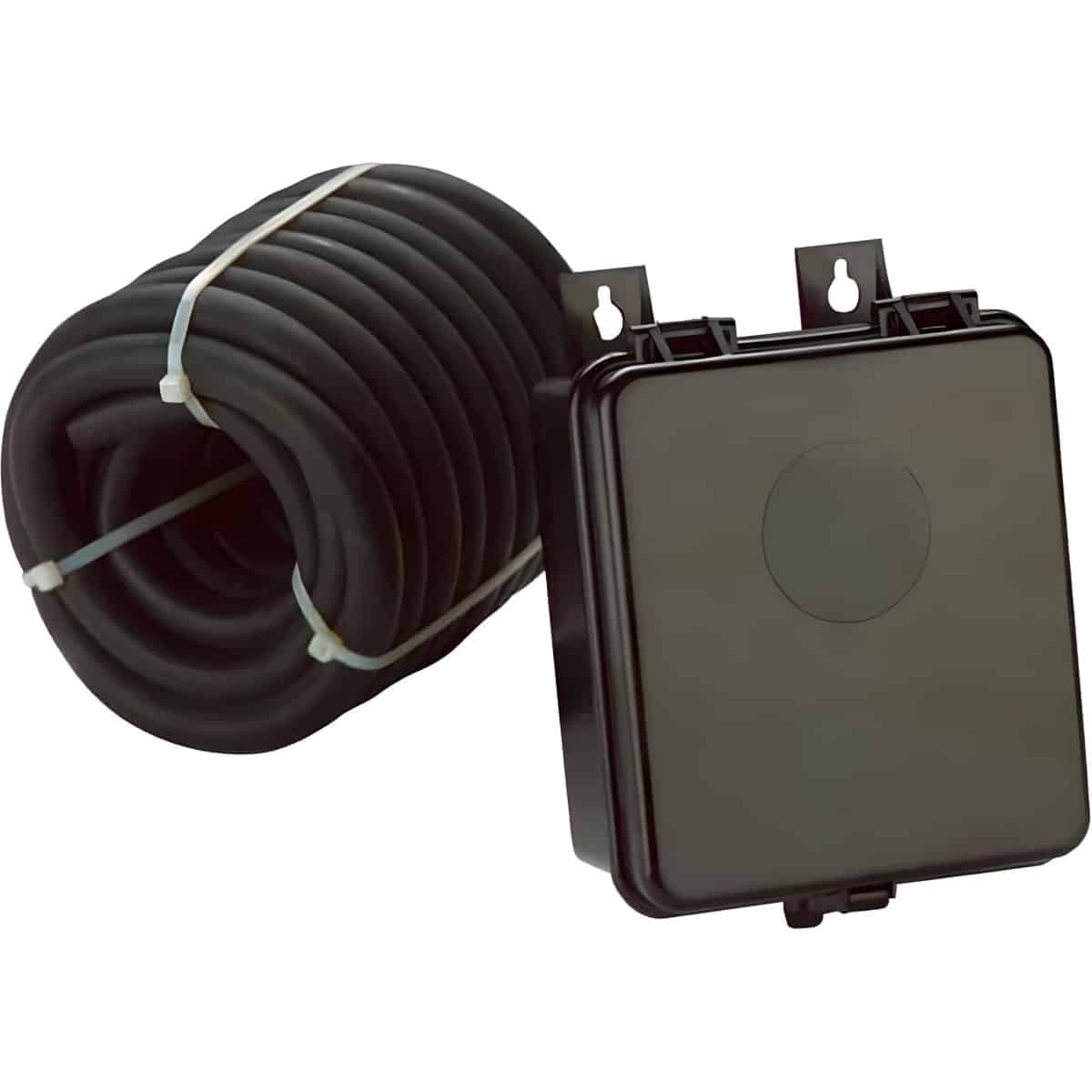
- Pneumatic: Do you remember the old gas stations with a rubber hose stretched across the entrance? It would ring a bell as the car rolled over the hose. This type of sensor is called a pneumatic sensor. When a heavy vehicle rolls over the hose, the change in air pressure inside the hose triggers the sensor.
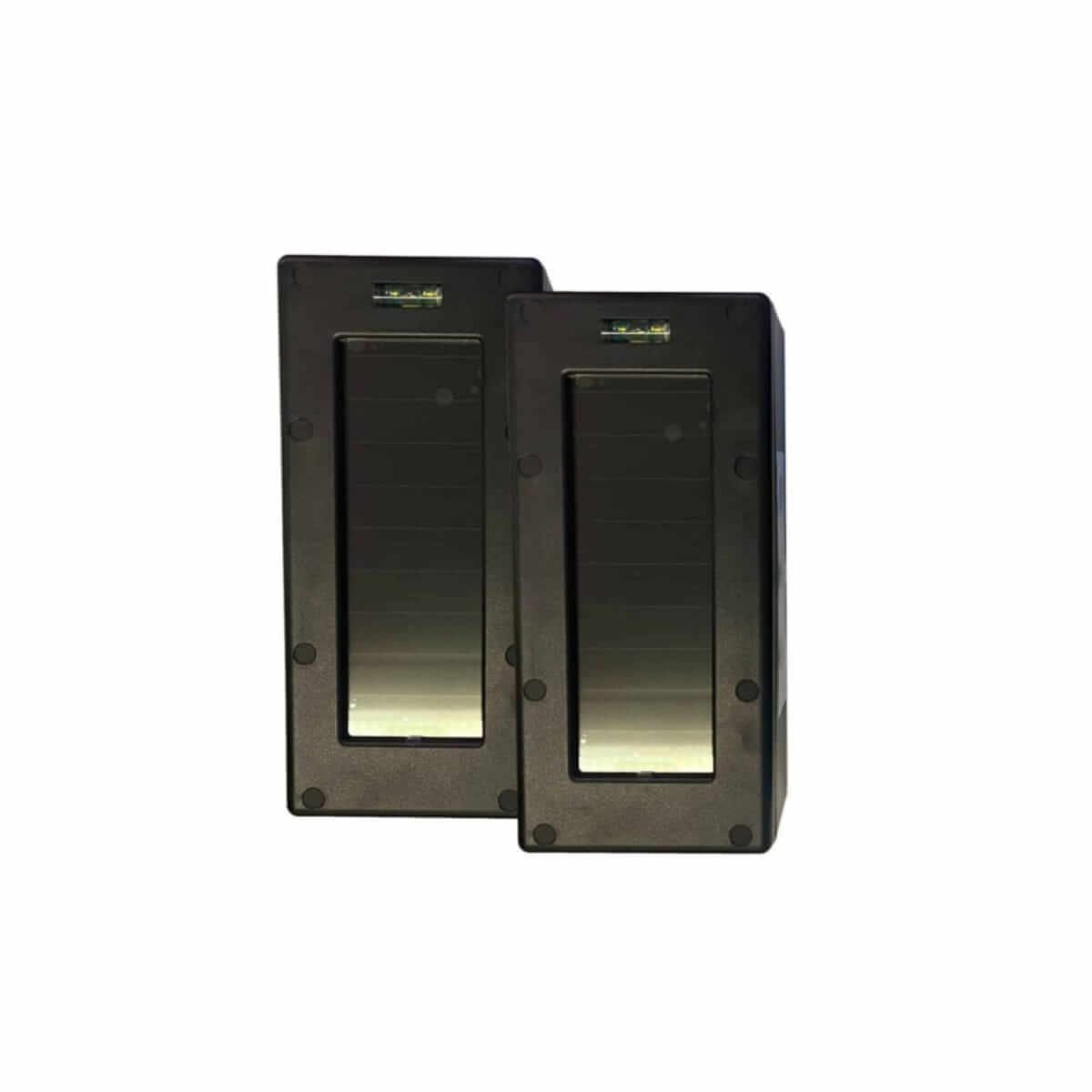
- Break Beam Sensor: These sensors work in pairs, and when someone or something passes between the pair of sensors, they detect that the beam between them was broken and are, thus, triggered.
More in Driveway Alarm FAQ
Browse the full FAQ category or continue with related answers from the same FAQ category.
Related FAQ categories
My ERA-DSTX Detection Range Dropped From 25 Feet to 15Nine times out of ten nothing has failed. A PIR sensor’s usable range is a moving number set by battery voltage, thermal contrast against the background, and the angle at which the target crosses the beam pattern — none of which show up on a thermometer or a tape measure. Work the checks below in order. Most cases resolve at step 1 or step 3.How Far Will My ERA-DSTX Driveway Sensor Really Reach?A PIR sensor doesn’t measure distance — it measures contrast. It sees a target only when that target is meaningfully warmer or cooler than whatever sits directly behind it, and only when the target moves across the lens’s detection pattern rather than straight at it. Change the background temperature, the approach angle, the battery voltage, or the amount of film on the lens, and the same sensor in the same spot will “lose” ten feet of range with nothing visibly different.Understanding Wireless Range: Published Specs vs. Real-WorldWhy Published Range Differs from Real-World Range When shopping for wireless doorbells, entrance alerts, driveway alarms, and other long-range wireless products, you’ll notice every product lists a maximum wireless range—typically stated as “up to X,000 feet.” For example, the Dakota Alert DCPA-4K-PLUS Driveway Alarm lists a range of “up to 5,000 feet.” It’s important to…My ERA-DSTX Outdoor Driveway Motion Sensor is Not Picking Up CarsGet a plain-language answer to my era-dstx outdoor driveway motion sensor is not picking up cars, with setup notes, compatibility details, and links to.Troubleshooting the LRA-DR1000 Driveway AlarmIn most cases, if your LRA-DR1000 is not working correctly, it is because of one of three issues: 1) Photo sensor dip switch is set to nighttime mode only2) Sensor/transmitter not paired with receiver correctly3) Weak or dead batteries in sensor/transmitter 1) Photo Sensor Inside Driveway Sensor (outdoor unit) May Be Set to Nighttime Only…