
What Size Doorbell Transformer Do You Need for a Video Doorbell?
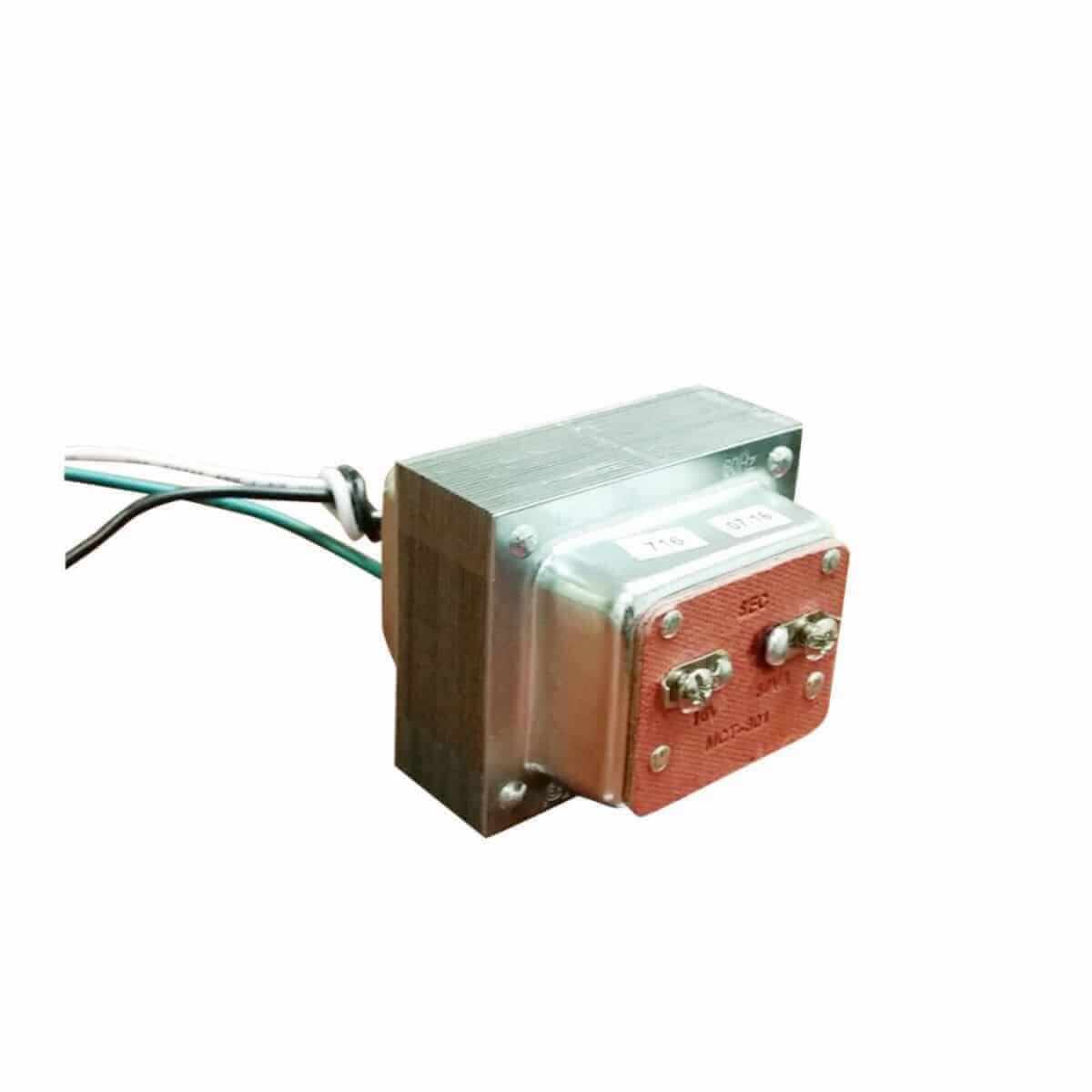
A standard 16V 10VA doorbell transformer is usually enough for a basic wired chime. Video doorbells often need more available VA, so many installs are better served by a 16V 30VA transformer.
Door chimes and business doorbells
This article is here to help you choose a door chime that fits the space, the noise level, and the way people actually enter the building. The useful comparisons are range, power source, receiver style, and whether you need sound only or sound plus a visual alert.
On This Page
Related Categories And Products
Transformer questions usually start after a video doorbell acts strange. The button lights up, but the chime will not ring. The camera works for a while, then drops offline. The transformer buzzes, runs hot, or measures lower than expected once everything is connected. In a lot of those calls, the voltage is not the whole story. The missing piece is VA.
Voltage and VA are not the same thing
Most residential wired doorbell systems in North America are low-voltage AC systems. A common older setup uses a 16V transformer rated around 10VA. That is usually fine for a simple wired doorbell: one push button, one mechanical or electronic chime, and short-to-normal wire runs.
VA is the transformer's capacity rating. In plain terms, it tells you how much electrical load the transformer can support at that voltage. A 16V 10VA transformer and a 16V 30VA transformer are both 16-volt doorbell transformers, but the 30VA unit can support more load before voltage sag, overheating, or nuisance behavior becomes a problem.
Why video doorbells are harder on old transformers
A traditional wired doorbell only needs power when someone presses the button. A video doorbell is different. It has electronics, Wi-Fi, a camera, night vision, a microphone, a speaker, and sometimes a battery that is being maintained through the doorbell circuit. That steady load is why a transformer that handled an old chime for years may struggle after a video doorbell is added.
Major video doorbell manufacturers commonly specify transformer ranges that go beyond the old 16V 10VA baseline. Ring lists different VA requirements by model, with many wired and battery models accepting higher transformer capacity. Google Nest's support material lists 16-24VAC and 10-40VA for several wired Nest doorbell models and notes that low power can show up as warning lights or setup trouble. Those ranges do not mean every installation needs the largest transformer available, but they do show why a marginal 10VA unit is often the weak link.
When a 16V 10VA transformer is still fine
If you are replacing a standard wired chime and keeping a normal push button, a 16V 10VA transformer is often enough. It is also usually the right size when the chime manufacturer calls for it and the wire run is not unusually long. There is no benefit in oversizing just for a simple doorbell that does not need it.
Between those cases, such as two chimes on one transformer, a lighted push button, or a wire run over about 50 feet, a 16V 15VA transformer like the T1615 gives 50% more capacity than a 10VA unit. Compare every size in the doorbell transformers category, and if you cannot find the old transformer, see where doorbell transformers are usually installed.
When we usually recommend 16V 30VA
For many video doorbell installations, we prefer a 16V 30VA transformer. It keeps the doorbell system at the familiar 16V rating while giving the circuit more available capacity. That extra VA matters when the video doorbell, chime, and wiring are all drawing from the same transformer.
A 16V 30VA transformer is a practical choice when:
- You are installing a Ring, Nest, Lorex, Arlo, Eufy, or similar wired video doorbell.
- The existing transformer is old, unlabeled, buzzing, warm, or rated only 10VA.
- The chime rings weakly or stops working after the video doorbell is connected.
- The video doorbell drops offline, complains about power, or has trouble charging.
- The wire run is longer than normal or there is more than one chime in the circuit.
Do not use VA to fix a voltage mismatch
More VA is not a workaround for the wrong voltage. If a device calls for 16-24VAC, stay inside that range. If a chime requires 16V, do not jump to a higher-voltage transformer just because the video doorbell can accept it. The transformer, chime, video doorbell, and any required power kit or resistor all need to be compatible with the same circuit.
Check the chime and the video doorbell instructions
Before changing parts, look at the transformer label and the video doorbell installation guide. Some video doorbells need a power kit at the chime. Some need a resistor if no chime is used. Some mechanical chimes behave differently than digital chimes. If the instructions call for a specific accessory, the transformer alone may not solve the problem.
Our practical recommendation
For a basic wired doorbell, use the transformer size the chime calls for, often 16V 10VA. For a video doorbell added to an existing wired chime system, start by checking the manufacturer's voltage and VA requirements. When the device allows 16V and the old transformer is 10VA or unknown, the T1630 16V 30VA doorbell transformer is the one we usually point customers toward.
If you are not comfortable working around electrical wiring, have an electrician replace the transformer. Doorbell wiring is low voltage on the output side, but the transformer connects to household line voltage on the input side.