
Door Chime When Door Opens: How They Work & What to Know
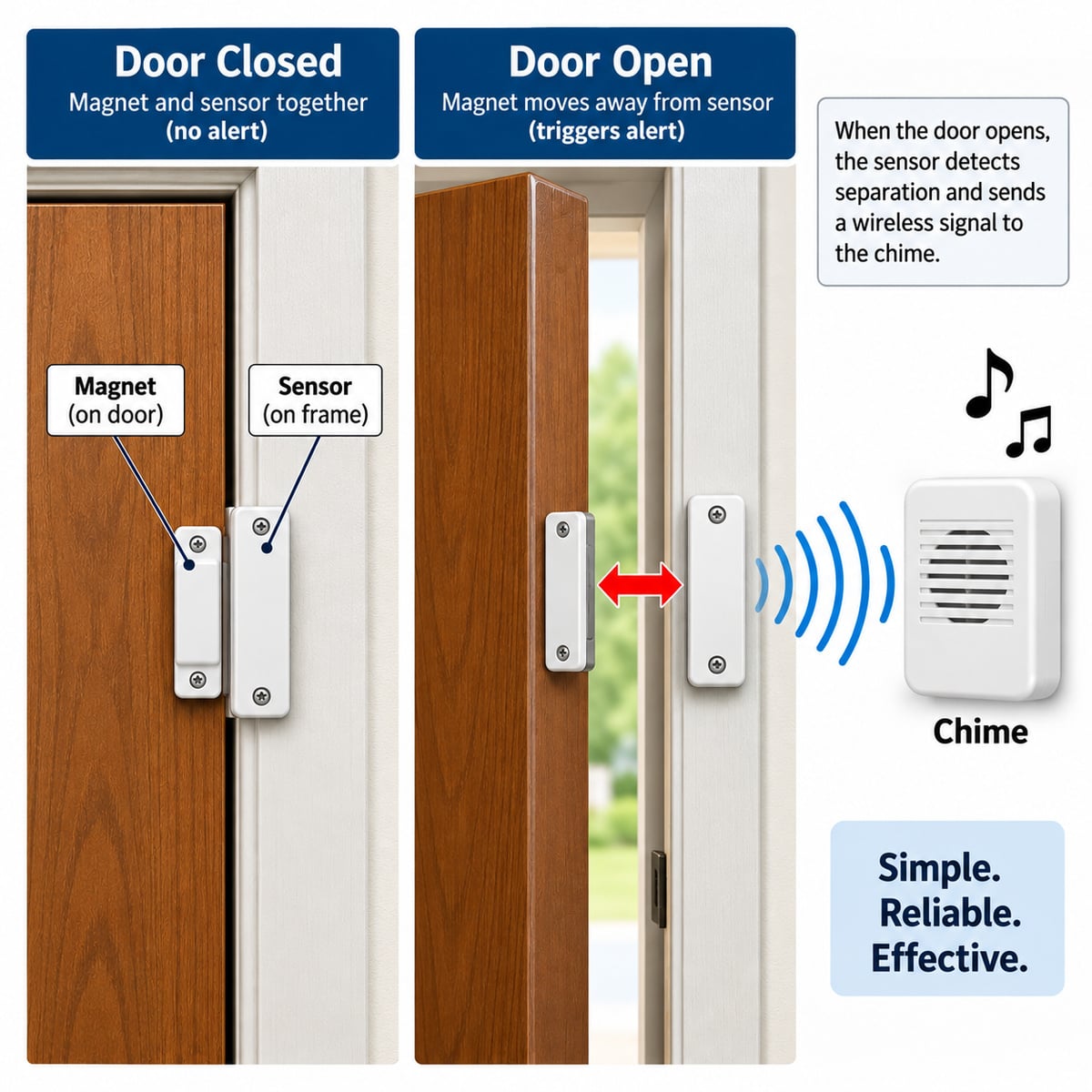
Door open chimes typically use a two-part magnetic sensor system to detect when a door opens, triggering an audible alert from a receiver unit.
On This Page
- What is a door open chime and how does it work?
- How magnetic door sensors trigger a chime
- Different types of door open chimes
- Where to use a door open chime
- Key features to consider when buying a door chime
- Tips for installing and maintaining your door open chime
- Troubleshooting common issues with door open chimes
A door chime designed to alert you when a door opens typically uses a two-part magnetic sensor system to detect the door's movement and trigger an audible alert from a receiver unit.
What is a door open chime and how does it work?
A door open chime, also known as an entry alert or door contact alarm, is a device that plays a sound when a door or window is opened. Its primary purpose is to notify occupants or business owners of someone entering or exiting a space. These systems consist of a sensor, typically mounted on the door, and a receiver unit that produces the chime.
When the door opens, the sensor sends a signal to the receiver, which then plays a pre-selected sound. This offers a simple and effective way to monitor access without complex security installations.
How magnetic door sensors trigger a chime
The most common method for a door chime to detect an open door is through magnetic contact sensors. These sensors usually consist of two pieces: a magnet and a reed switch. One part is attached to the door frame, and the other is attached to the moving door itself.
When the door is closed, the magnet and the reed switch are in close proximity, creating a complete electrical circuit. When the door opens, the magnet moves away from the reed switch. This breaks the circuit, and the sensor detects this change in state. The sensor then wirelessly or via wire sends a signal to the chime receiver, which sounds the alert.
Different types of door open chimes
Door open chimes come in various configurations to suit different needs and installation preferences. Understanding the differences helps you choose the right system for your situation.
- Wireless Systems: These are the most flexible and common. A wireless sensor transmits a signal to a receiver, which can be a plug-in unit or battery-powered. Installation is straightforward as it doesn't require running wires through walls. Wireless door chimes are ideal for renters or temporary setups.
- Wired Systems: Wired door open chimes connect the sensor directly to the chime unit with low-voltage wiring. While installation can be more involved, wired systems offer reliable performance without concerns about battery life or wireless interference. They are often chosen for permanent installations in commercial settings.
- Standalone Units: Some basic door chimes are self-contained, with the sensor and chime built into a single unit. These are typically battery-powered and emit a localized sound directly from the door or window where they are installed. They are simple to use for individual doors or specific areas.
Where to use a door open chime
Door open chimes offer versatility for various applications, enhancing security, convenience, and awareness in both commercial and residential environments.
- Businesses: For retail stores, offices, or workshops, a door chime serves as an immediate alert when a customer or delivery person enters. This helps small business owners monitor activity even when they are not near the entrance. You can find options specifically designed for business door chimes.
- Homes: In residential settings, they can alert parents when children open exterior doors, pool gates, or cabinet doors containing hazardous items. They are also useful for monitoring entry points in a home office or garage.
- Specific Rooms: They can be placed on pantry doors, server room entrances, or storage closets to monitor unauthorized access or simply to know when someone has entered a sensitive area.
Key features to consider when buying a door chime
When selecting a door open chime, several features can impact its effectiveness and suitability for your needs.
- Range: For wireless systems, consider the distance between the sensor and the receiver. A longer range, such as that offered by the SS132 Wireless Magnetic Door Contact, ensures reliability in larger homes or businesses.
- Volume and Sound Options: Look for adjustable volume levels and a variety of chime sounds to suit your preference and environment. Some receivers, like those discussed on our doorbell sounds & chime receivers page, offer multiple tones.
- Power Source: Decide between battery-powered sensors and receivers for flexibility, or plug-in receivers for continuous operation without battery changes.
- Expandability: If you plan to monitor multiple doors or windows, choose a system that allows you to add additional sensors and receivers.
- Visual Alerts: For noisy environments or for individuals with hearing impairments, consider systems with flashing strobe lights or vibrating alerts, as found in some hearing impaired products.
Tips for installing and maintaining your door open chime
Proper installation and regular maintenance ensure your door open chime operates effectively and reliably.
Installation: Mount the two parts of the magnetic sensor as close as possible without touching, typically within a quarter-inch gap, for consistent detection. Use the provided adhesive or screws for secure attachment to the door and frame. Position the receiver in a central location within range of the sensor to ensure a clear signal.
Maintenance: Regularly check the batteries in wireless sensors and receivers, replacing them as needed to prevent unexpected outages. Keep the sensor components clean and free from dust or debris that could interfere with their operation. Test the system periodically by opening the door to confirm it is functioning correctly.
Troubleshooting common issues with door open chimes
Most issues with door open chimes are minor and can be resolved with simple checks.
- No Chime When Door Opens: First, check the batteries in both the sensor and the receiver. Ensure the sensor parts are aligned correctly and are within the recommended distance when the door is closed. For wireless systems, confirm the receiver is plugged in (if applicable) and that both units are within range of each other.
- False Alarms: This often indicates poor alignment of the magnetic sensor components or excessive vibration in the door frame. Realign the sensor parts, making sure they are securely mounted and not shifting. In rare cases, strong electromagnetic interference might cause false triggers; try relocating the receiver if possible.
If you continue to experience problems, refer to the product's user manual or our general troubleshooting tips for your doorbell.
More in SS Series Business Chimes FAQ
Browse the full FAQ category or continue with related answers from the same FAQ category.