
What does a doorbell transformer look like?
Discover what a doorbell transformer looks like and how to identify it in your home.
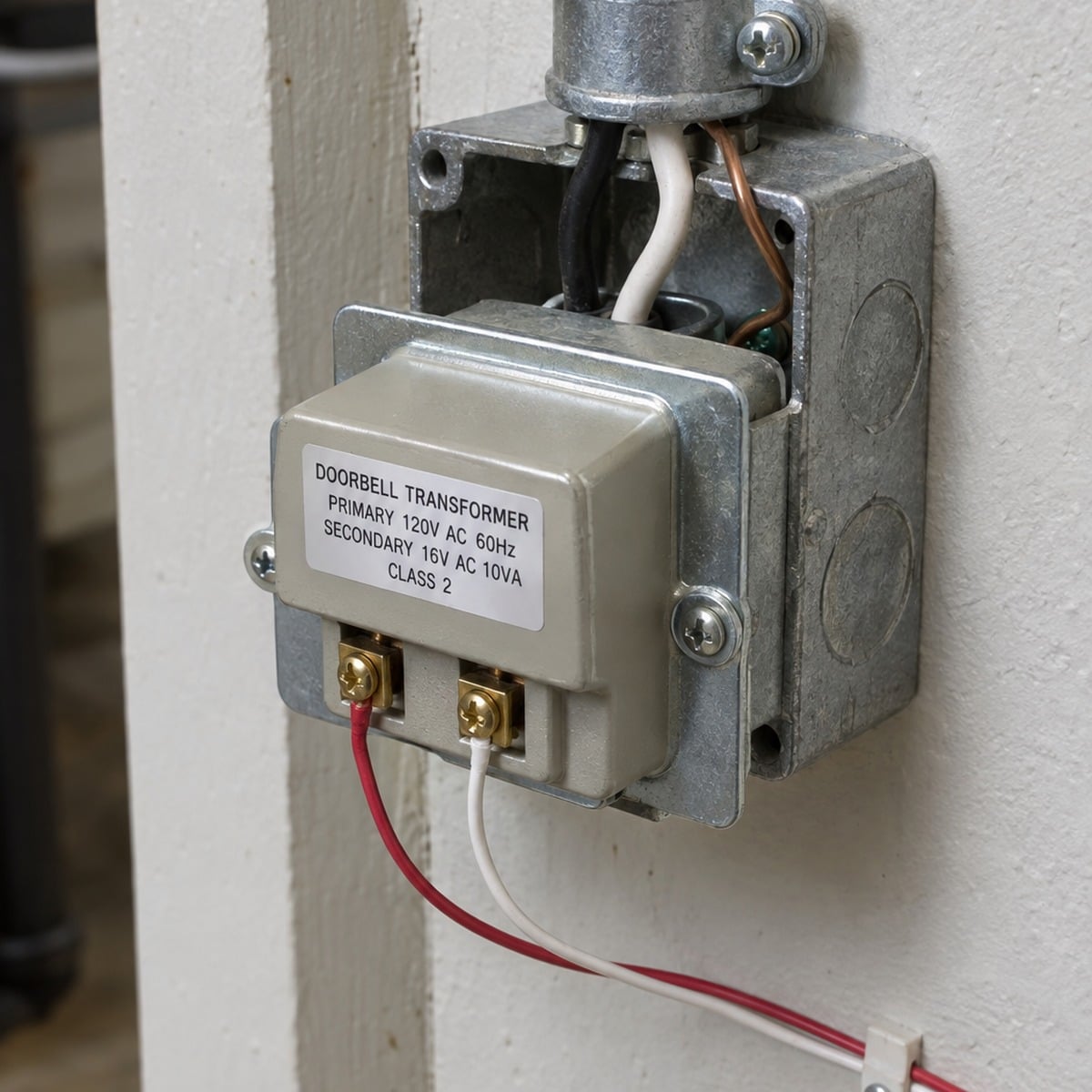
What does a doorbell transformer look like?
A doorbell transformer is typically a small, box-like device that converts high voltage from your home’s electrical system to a lower voltage suitable for doorbells, usually 16V or 24V. It often has a metal or plastic casing and may be mounted on a wall or inside an electrical junction box.
Common features of doorbell transformers
Doorbell transformers generally have the following features:
- Input voltage: Usually 120V AC from your home’s electrical supply.
- Output voltage: Commonly 16V or 24V AC for doorbell operation.
- VA rating: Indicates the power capacity, typically ranging from 10VA to 30VA.
- Mounting options: Can be surface-mounted or installed in a junction box.
How to identify a doorbell transformer
To identify a doorbell transformer, look for a small device connected to your doorbell wiring. It may have wires leading to the doorbell and a power source. Check for labels indicating the voltage and VA rating, which are usually printed on the casing.
Where to find doorbell transformers in your home
Doorbell transformers are often located in the following places:
- Near the main electrical panel.
- In a basement or crawl space.
- Inside a wall or ceiling junction box.
- In closets or utility rooms.
Understanding voltage and VA ratings
Voltage ratings indicate the electrical pressure supplied to the doorbell, while VA ratings show the power capacity of the transformer. For most residential doorbells, a transformer with a 16V output and a VA rating of 10 to 30 is sufficient. Ensure your transformer matches the requirements of your doorbell system.
Troubleshooting transformer issues
If your doorbell isn’t working, the transformer may be the issue. Check for the following:
- Ensure it is receiving power by checking the circuit breaker.
- Inspect for any visible damage or burnt components.
- Use a multimeter to test the output voltage; it should match the rated output.
When to replace your doorbell transformer
Consider replacing your doorbell transformer if:
- It shows signs of physical damage, such as burns or melted components.
- The output voltage is inconsistent or below the required level.
- Your doorbell system is upgraded and requires a different voltage or VA rating.
For more information on choosing the right transformer, visit our guide on choosing the right wired doorbell transformer. If you need to troubleshoot issues with your doorbell, check our troubleshooting tips at Troubleshooting Tips for Your Doorbell.
For those looking to purchase a transformer, browse our selection of doorbell transformers.
More in Installation & Setup FAQ
Browse the full FAQ category or continue with related answers from the same FAQ category.