
What is bell wire? Your guide to doorbell wiring.
Discover what bell wire is, its specifications, and installation tips for your doorbell system.
On This Page
- What is bell wire for wired doorbells?
- Common bell wire gauges and what they mean
- Understanding doorbell wire voltage requirements
- Choosing the right bell wire for your doorbell setup
- Tips for installing new doorbell bell wire
- When to replace existing doorbell wiring
- Frequently asked questions about doorbell wiring
What is bell wire for wired doorbells?
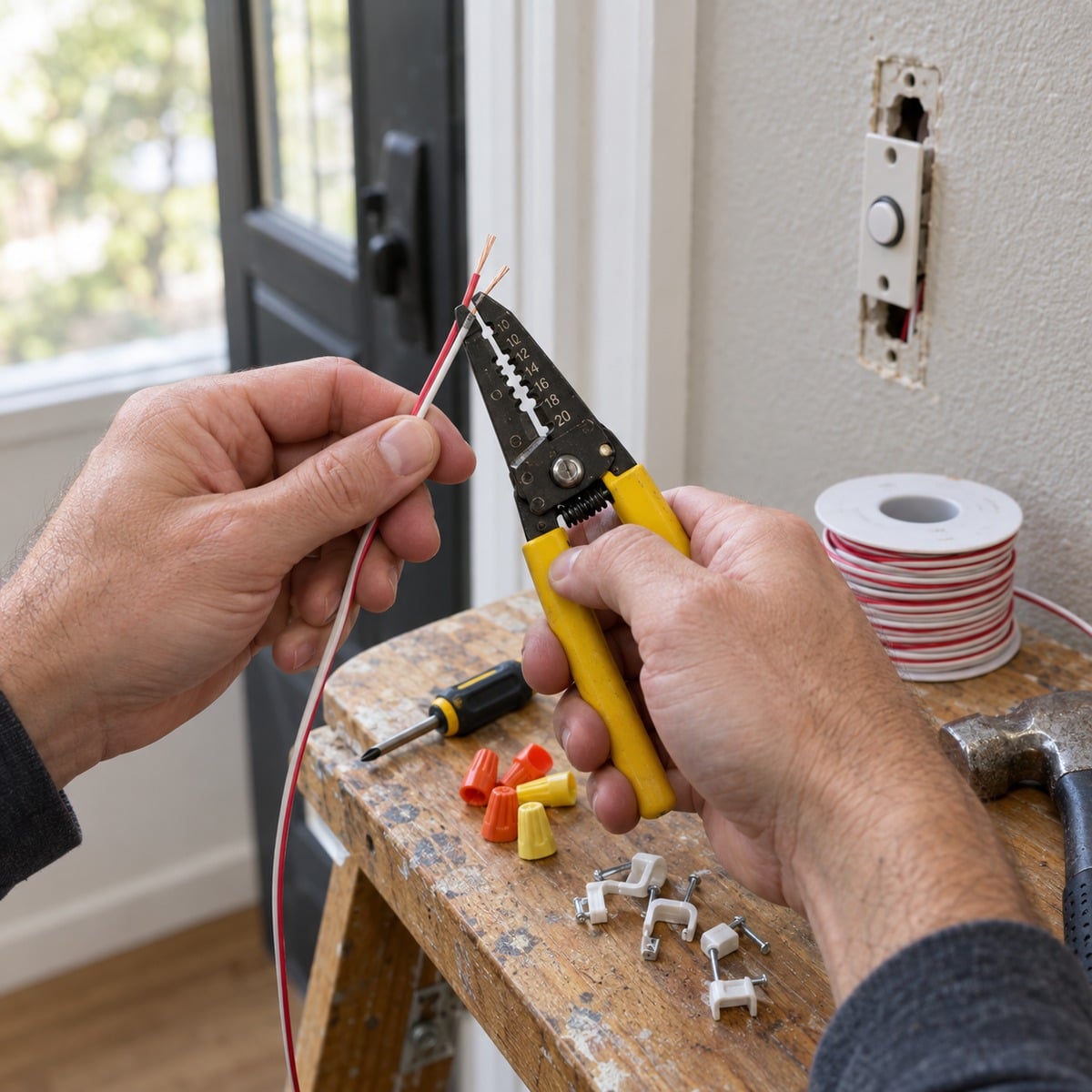
Bell wire is a type of electrical wire specifically designed for doorbell systems. It typically consists of two insulated copper conductors, allowing it to carry low-voltage power from the transformer to the doorbell itself. This wire is essential for ensuring that your wired doorbell functions correctly.
Common bell wire gauges and what they mean
Bell wire is available in various gauges, commonly ranging from 18 to 22 AWG (American Wire Gauge). A lower gauge number indicates a thicker wire, which can carry more current over longer distances. For most residential doorbell systems, 18 AWG is often recommended as it provides a good balance between flexibility and current-carrying capacity.
Understanding doorbell wire voltage requirements
Most wired doorbells operate on low voltage, typically between 8 to 24 volts. The voltage requirement is determined by the doorbell and transformer specifications. It’s crucial to match the wire gauge to the voltage to ensure proper operation and avoid potential issues.
Choosing the right bell wire for your doorbell setup
When selecting bell wire, consider the distance between the transformer and the doorbell. For longer runs, opt for a thicker wire (lower gauge) to minimize voltage drop. Additionally, ensure that the wire is rated for low voltage applications to avoid any safety hazards.
Tips for installing new doorbell bell wire
- Turn off the power to your doorbell system at the breaker box.
- Measure the distance from the transformer to the doorbell to determine the length of wire needed.
- Use a wire stripper to remove insulation from the ends of the wire before connecting it to the transformer and doorbell.
- Secure the wire using staples or clips to prevent it from being damaged.
- Once installed, restore power and test the doorbell to ensure it operates correctly.
When to replace existing doorbell wiring
Consider replacing your doorbell wiring if you experience intermittent operation, low sound volume, or if the wire is damaged or frayed. Additionally, if you are upgrading to a new doorbell system that requires different specifications, replacing the wiring may be necessary.
Frequently asked questions about doorbell wiring
What gauge wire should I use for my doorbell? 18 AWG is commonly recommended for most residential doorbell installations.
Can I use regular electrical wire for my doorbell? It’s best to use bell wire designed for low voltage applications to ensure safety and functionality.
How do I know if my doorbell transformer is working? If your doorbell does not ring, check the transformer for power using a multimeter.
For more detailed information on doorbell wiring, check out our guide on what doorbell wire you need.
If you're looking for bell wire, you can find it in our doorbell transformers and wire category.
For additional troubleshooting tips, visit our troubleshooting tips for your doorbell.
More in Wired Doorbell FAQ
Browse the full FAQ category or continue with related answers from the same FAQ category.